On March 28, CMG's Focus Interview program aired a special report titled "Multiple Measures Taken to Tackle Pollen Disturbances". The report highlighted the effectiveness of an eco-friendly biological agent developed by Professor Qin Ling's team at our school in supporting spring pollen control, safeguarding public health, and driving urban ecological balance in Beijing.
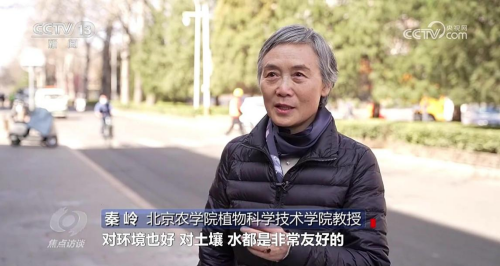
The report noted that Beijing has adopted a governance approach of "preserving trees, scientific management, and proactive prevention" this year. The biggest highlight of Beijing's pollen control in 2026 is the application of science and technology. Through continuous research efforts, Professor Qin Ling's team has successfully developed a highly efficient and environment-friendly pollen fixing agent, providing an effective "BUA solution" for the scientific control of pollen.
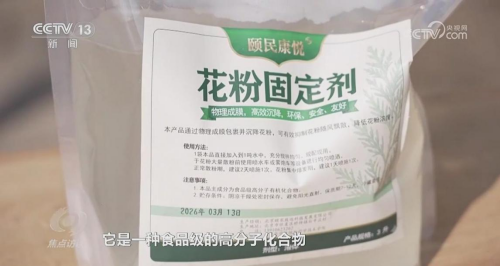
In the program, Professor Qin Ling explained in detail the mechanism and advantages of the technology. "The Sabina chinensis pollen fixing agent is made of food-grade macromolecular compounds, making it highly friendly to the environment, soil and water. Film forming is the core mechanism, where macromolecules form a film that wraps falling pollen grains and also coats the male cones that have not yet released pollen, causing the pollen to settle and thus significantly reducing the amount of airborne pollen." The eco-friendly biological agent developed by BUA can form a protective film that wraps pollen and male cones. Its pollen-settling efficiency is 17 to 20 times higher than that of water spraying, and a single application will remain effective for two days, boosting efficiency by 5 to 6 times.
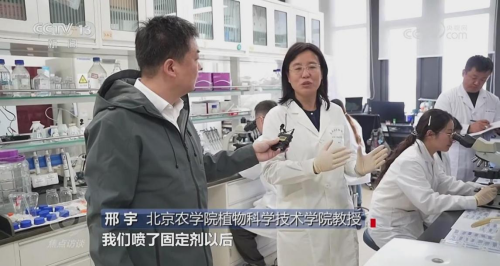
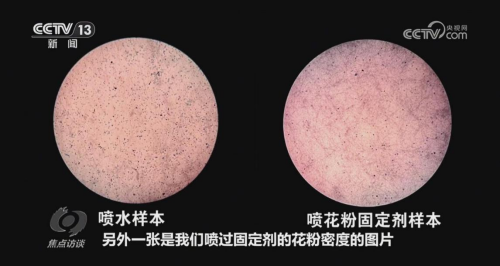
Professor Xing Yu from the team demonstrated laboratory comparative observations in the program. Microscopic observation provided more intuitive evidence of the product's effectiveness. "The microscopic results are quite encouraging. Following application of the fixing agent, the concentration of pollen grains in the air is significantly lower than that after water spraying."
At present, the pollen fixing agent has been applied in key demonstration areas across six urban districts of Beijing, covering approximately 20% of male Sabina chinensis trees. By reducing allergenic pollen production at the source, the move is expected to minimize the impact of allergens. Monitoring data shows that from March 1 to 18, 2026, Beijing's pollen concentration level decreased notably year on year.
In recent years, aligning with the needs arising from megacity governance and livable environment development in Beijing, BUA has leveraged its interdisciplinary strengths and developed a series of technological products in ecological conservation, green agriculture, food safety and other fields. The research by Professor Qin Ling's team exemplifies BUA's efforts to actively serve the capital's development in the new era and empower environmental governance and ecological protection with technological innovation. BUA will continue to deepen organized scientific research, focus on the capital's strategic positioning and people's needs, further implement innovation-driven projects, and explore new paths for the integration of industry and education as well as science and education, so as to contribute "BUA Strength" to building Beijing into a world-class harmonious and livable city.

 search


 LATEST NEWS