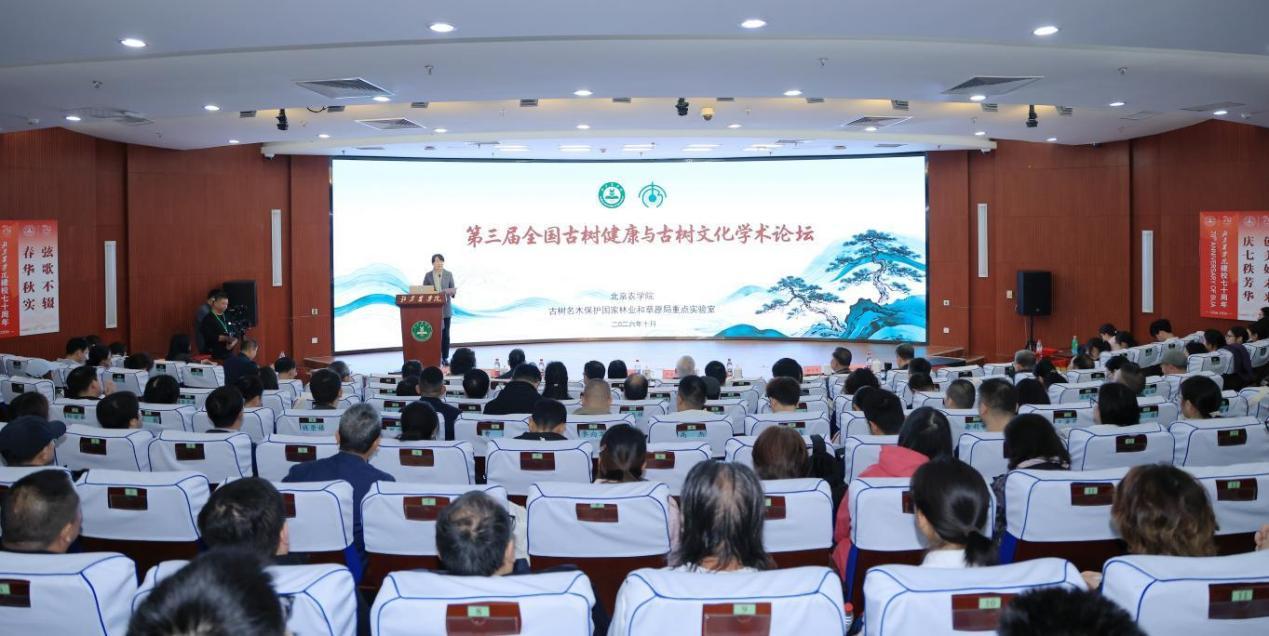
The 3rd National Academic Forum on Ancient Tree Health and Culture was held at Beijing University of Agriculture (BUA) on October 24. More than 240 experts and scholars, front‑line practitioners, and media representatives from universities, research institutes, and organizations involved in ancient tree conservation across China attended the forum. Under the theme "Protecting Ancient and Famous Trees, Carrying Forward China’s Cultural Heritage", participants engaged in in-depth exchanges and discussions on topics including the health and rejuvenation of ancient trees, ancient tree resources and management, and ancient tree culture and utilization. The opening ceremony was presided over by Wu Yan, vice president of BUA.
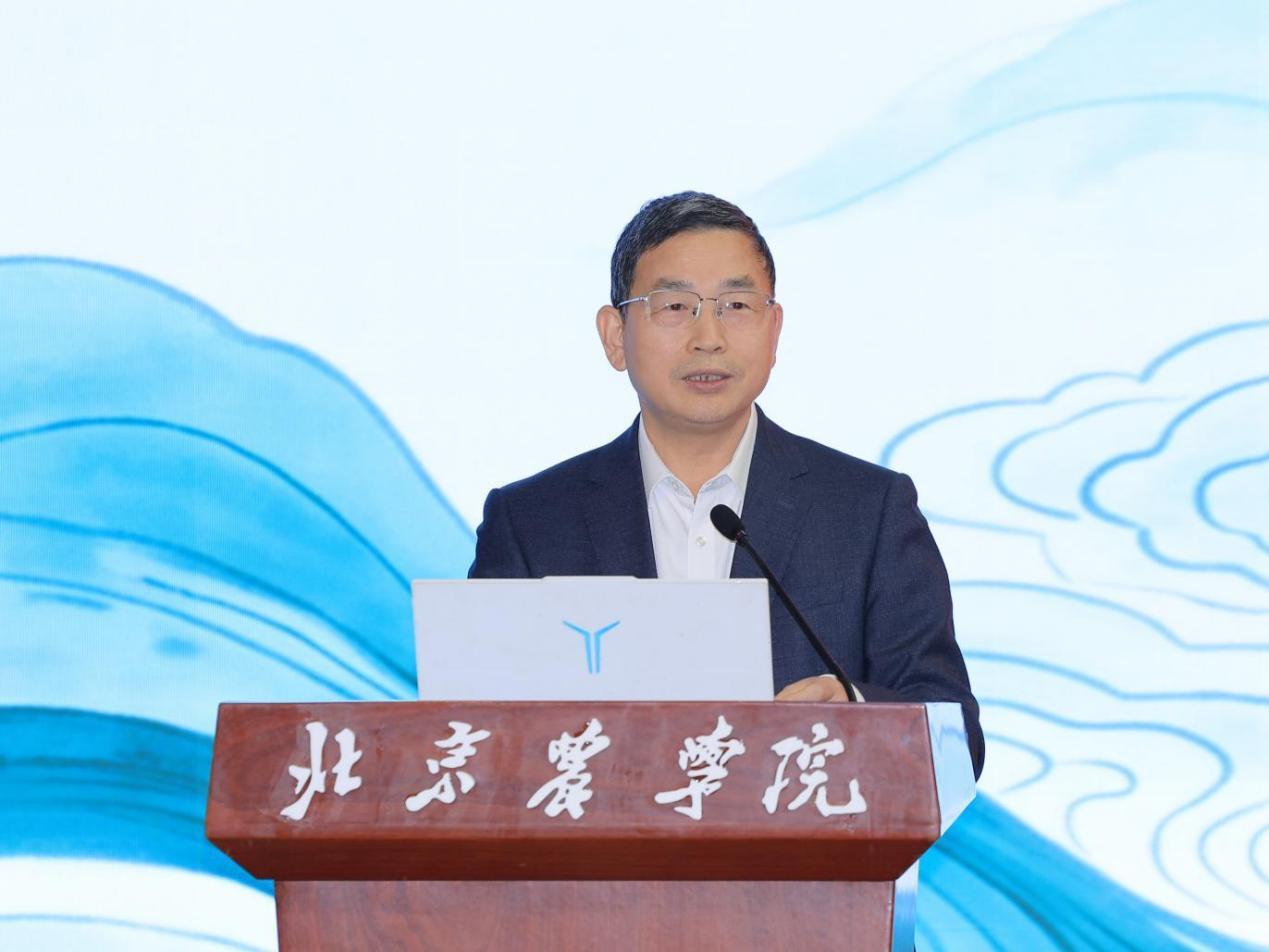
Duan Liusheng, president of BUA, delivered a welcome address. He pointed out that in recent years, BUA has steadily pushed forward research on ancient‑tree conservation and made a series of technological breakthroughs in ancient‑tree genomics, tree‑age identification, monitoring equipment R&D, emergency rescue and tree rejuvenation. BUA has taken the lead in building a talent training system for ancient‑tree conservation, compiled China’s first set of specialized textbook series for this field, set up special scholarships, and carried out regular professional training and science popularization activities. He hoped that taking this forum as an opportunity, all parties could strengthen multi‑stakeholder collaborative innovation, continuously boost the scientific, smart and precise level of ancient‑ and famous‑tree conservation, and optimize collaborative innovation mechanisms for ancient‑tree conservation.
Officials from the National Forestry and Grassland Administration, Beijing Municipal Forestry and Parks Bureau, Beijing Association of Tree Medicine and Beijing Greening Foundation attended the forum. They stated that ancient and famous trees serve as vital carriers of ecological civilization and “living green cultural relics” inheriting China’s historical and cultural heritage. The official implementation of Regulations on the Protection of Ancient and Famous Trees marks that the protection of ancient and famous trees has fully entered a law‑based track. They hoped that BUA would take its 70th anniversary as an opportunity, give full play to the geographical, scientific‑technological and talent advantages of Beijing‑based universities, build upon its strengths in the capital and expand its influence nationwide. BUA should further strengthen national‑level research platforms for ancient‑ and famous‑tree conservation, advance the application of new ideas and technologies in this field, and make greater contributions to ancient‑ and famous‑tree conservation in Beijing and the whole country.
On‑site at the forum, both sides jointly launched the Ancient‑tree Science and Education Program, focusing on research innovation and professional talent training for ancient‑tree conservation. The Program will deepen collaboration in scientific research, education and public welfare, mobilize resources from all sectors of society, and advance the cause of ancient‑ and famous‑tree conservation.
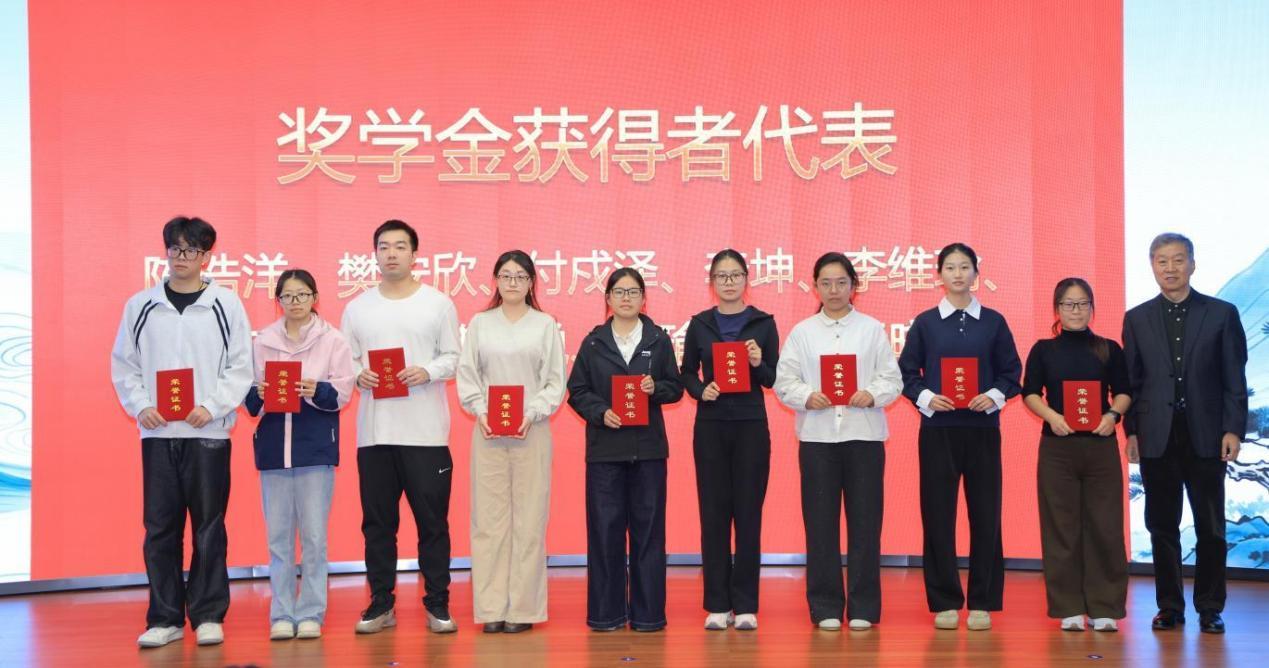
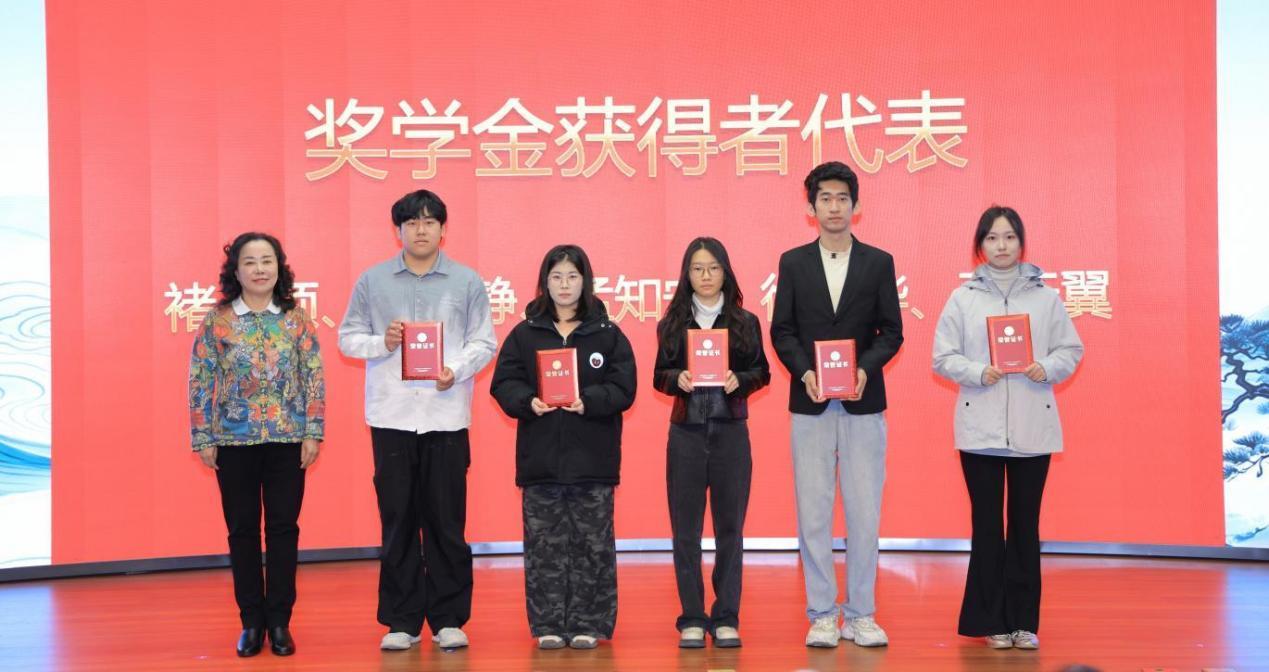
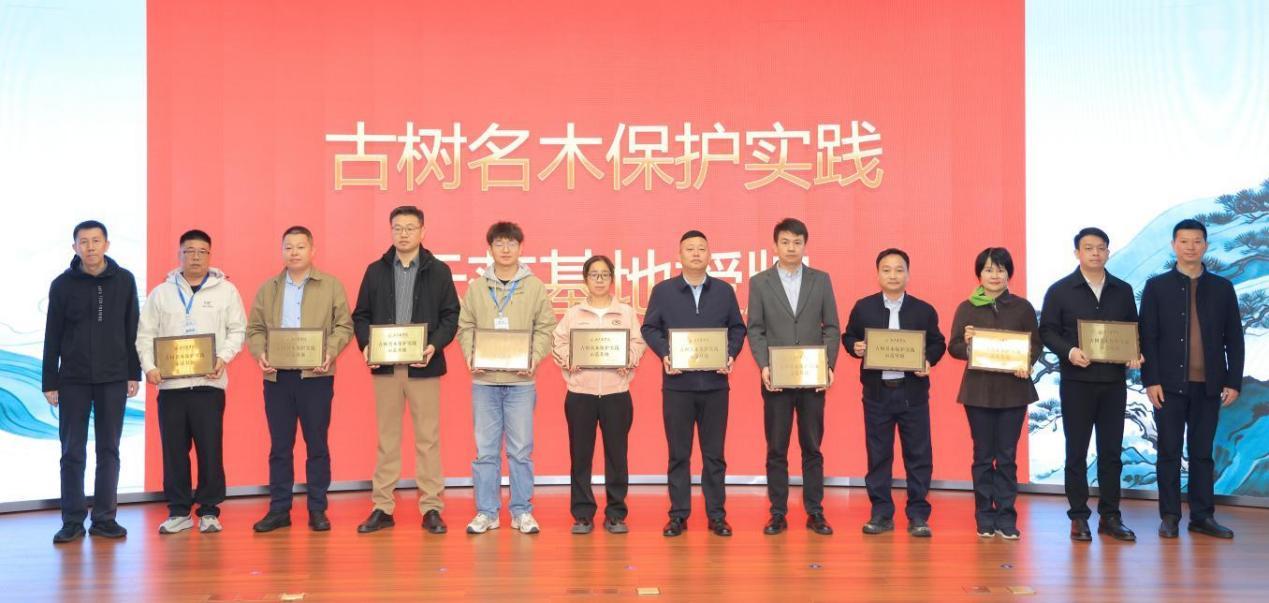
Forum leaders presented honorary certificates to winners of The 4th Special Scholarship for Ancient‑tree Conservation Studies and the Tree Doctor Micro‑Major Scholarship of BUA. A plaque‑awarding ceremony for Practical Demonstration Bases for Ancient‑ and Famous‑Tree Conservation was also held, where leaders awarded base plaques to ten enterprises from across the country.
Yin Weilun, Member of the Chinese Academy of Engineering and former President of Beijing Forestry University; Professor Fang Yanming from Nanjing Forestry University; Professor Yang Yongchuan from Chongqing University; Professor‑level Senior Engineer Wang Yongge from Beijing Institute of Landscape and Forestry Sciences; and Associate Research Fellow Fang Ouya from the Institute of Botany, Chinese Academy of Sciences, delivered keynote speeches. Three parallel sessions were set up for the forum, namely Ancient‑tree Health and Rejuvenation, Ancient‑tree Resources and Management, and Ancient‑tree Culture and Utilization.

 search



 LATEST NEWS
