On October 13, Yin Li, secretary of the CPC Beijing Municipal Committee, visited Beijing University of Agriculture (BUA) to discuss the differentiated development of municipal universities and Beijing's efforts to become a leading model for building a country strong in education. He stressed the importance of thoroughly implementing General Secretary Xi Jinping's important statements on education, fully implementing the Party's education policy, upholding the socialist direction of education, and fulfilling the fundamental mission of fostering virtue through education. He called on universities to pursue differentiated development in line with their designated roles as research-oriented, application-oriented, or skills-oriented institutions in Beijing. By building on their distinctive strengths and raising the quality of education, they should provide the talent, scientific and technological expertise, and intellectual support needed for the capital's development in the new era.
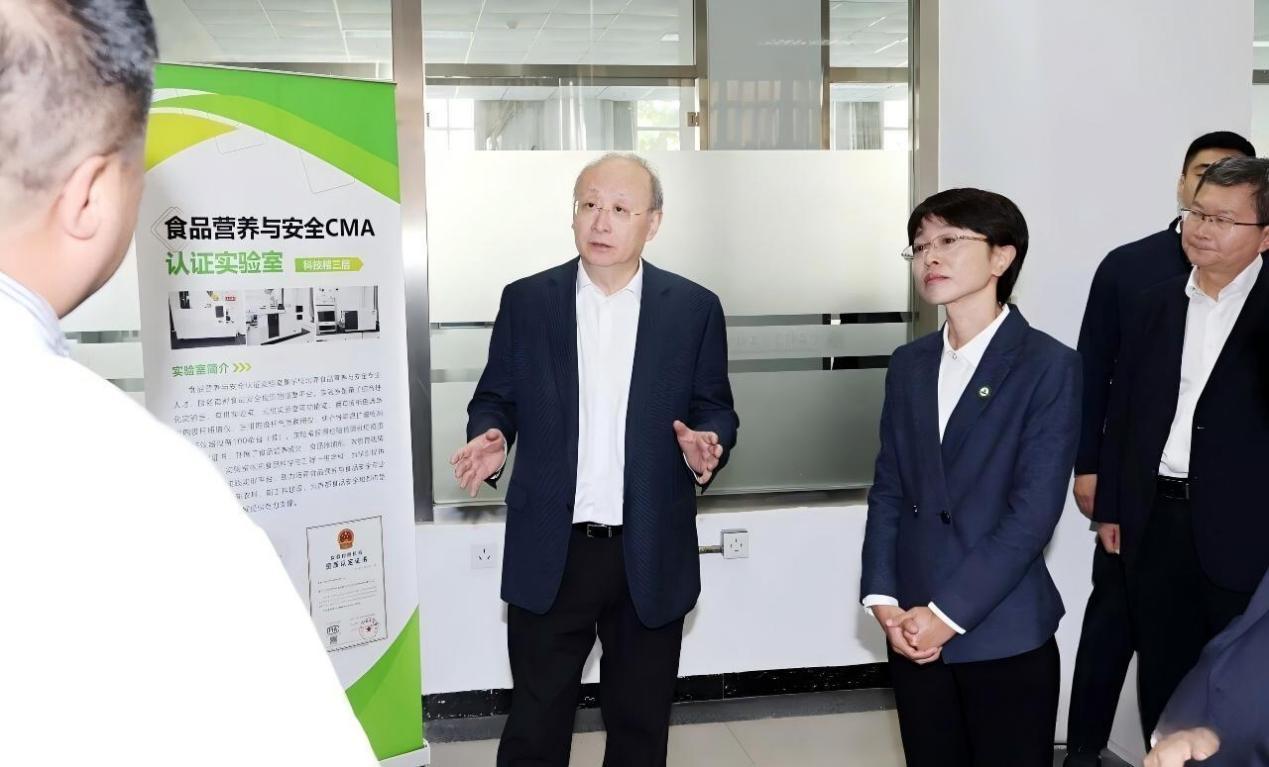
Over its 70-year history, BUA has developed distinctive strengths in horticulture, plant and animal sciences, agricultural sciences, and food science and engineering. During his visit, Yin toured the university's experimental teaching demonstration centers for food processing and food safety and for plant production. He urged BUA to capitalize on its strengths and deliver more research breakthroughs in areas such as biological breeding and smart agriculture. The university, he said, should play a greater role in improving the quality and efficiency of agricultural production in Beijing and helping farmers increase their incomes and improve their livelihoods. Yin also called for greater innovation in food safety testing technologies to strengthen food safety oversight and better protect the public.
Yin noted that Beijing's municipal universities are an integral part of the capital's higher education system and play a vital role in its efforts to become a leading model for building a country strong in education. He called on these institutions to continue strengthening their distinctive academic strengths in response to national strategies and the needs of Beijing's development. Guided by the Double First-Class initiative, universities should keep pace with advances in science, technology, and industry, regularly review and optimize their academic disciplines, and further develop their strongest programs. They should promote closer integration of education, science and technology, and talent development, while innovating in the education of top-tier talent in basic disciplines, interdisciplinary fields, and strategically important areas where talent is urgently needed. Universities should also deepen collaboration with research institutions and leading enterprises in talent development, better aligning talent development with innovation and industrial needs. In addition, they should harness AI to improve educational quality and effectiveness.
Yin stressed that universities must also do more to support Beijing's high-quality development. Guided by the strategic priorities of setting our sights on the global frontiers of science and technology, national economic development, the major needs of the country, and the health and safety of the people, universities should enhance their capacity for scientific and technological innovation, advance basic research, and make breakthroughs in critical core technologies. They should accelerate the translation of research findings into practical applications and commercial products, helping emerging industries such as AI, biomedicine, and green energy grow and thrive. These efforts would provide sustained momentum for developing a modern industrial system with distinctive Beijing characteristics. Universities should also make better use of their think tanks to inform policymaking. By focusing on priorities such as advancing Beijing's role as a national center for political affairs, cultural development, international exchanges, and scientific and technological innovation, improving the governance of megacities, and enhancing people's well-being, they should offer policy recommendations and contribute their expertise to the capital's modernization.
Yin called for full implementation of the president responsibility system under the leadership of university CPC committees, ensuring that the Party's leadership runs through every aspect of university governance and operations. Universities should use Xi Jinping Thought on Socialism with Chinese Characteristics for a New Era to guide education and character development, and develop distinctive programs under the Great Ideological and Political Education initiative. They should promote the educator spirit, strengthen their teaching faculties, and foster a strong institutional culture and academic ethos. The CPC Beijing Municipal Committee Leading Group for education, science and technology, and talent development should strengthen coordination and guide the differentiated development of municipal universities. Relevant municipal departments should provide tailored support to each institution under a "one university, one policy" approach. Beijing should also improve its differentiated evaluation system for municipal universities, enabling every institution to pursue excellence and strive for first-class status in its respective field.
Municipal leaders Zhao Lei, Yu Yingjie, and Mu Peng also took part in the visit.

 search



 LATEST NEWS
