Recently, Associate Professor Xiaoye Liu's team from the College of Animal Science and Technology published a research paper in Phytomedicine (IF=11.29), a leading international journal in the field of natural medicines. The paper, titled Quercetin as tigecycline adjuvant reverses multidrug-resistant Acinetobacter baumannii infection, systematically outlines a novel treatment strategy. It reveals that the natural flavonoid quercetin acts as a tigecycline adjuvant, reversing the resistance of multidrug-resistant Acinetobacter baumannii through a dual mechanism of inhibiting efflux pumps and disrupting the cell membrane. The in vivo efficacy of this approach was validated in a mouse pneumonia model, offering a natural product-derived solution to the antibiotic resistance crisis associated with this "last-resort" defense.
Acinetobacter baumannii (AB) is an opportunistic Gram-negative pathogen prevalent in hospital environments and is designated as a critical priority pathogen by the World Health Organization (WHO). Tigecycline currently serves as one of the "last-resort" medications for treating multidrug-resistant AB infections. However, AB has developed resistance to tigecycline via the overexpression of efflux pumps, posing a severe clinical threat of having no viable treatment options once the drug fails. Natural products are considered crucial sources for antibiotic potentiators due to their multi-target and multi-mechanism synergistic properties. Liu's team has a long-standing commitment to developing host-directed antibacterial drugs, with a specific focus on traditional Chinese medicine flavonoids. Under this research framework, the study systematically investigated the potentiation strategy and molecular mechanisms of quercetin as a tigecycline adjuvant. The findings demonstrate that quercetin exerts a significant synergistic effect across all tested strains, reducing the minimum inhibitory concentration (MIC) of tigecycline by 4 to 32 folds.
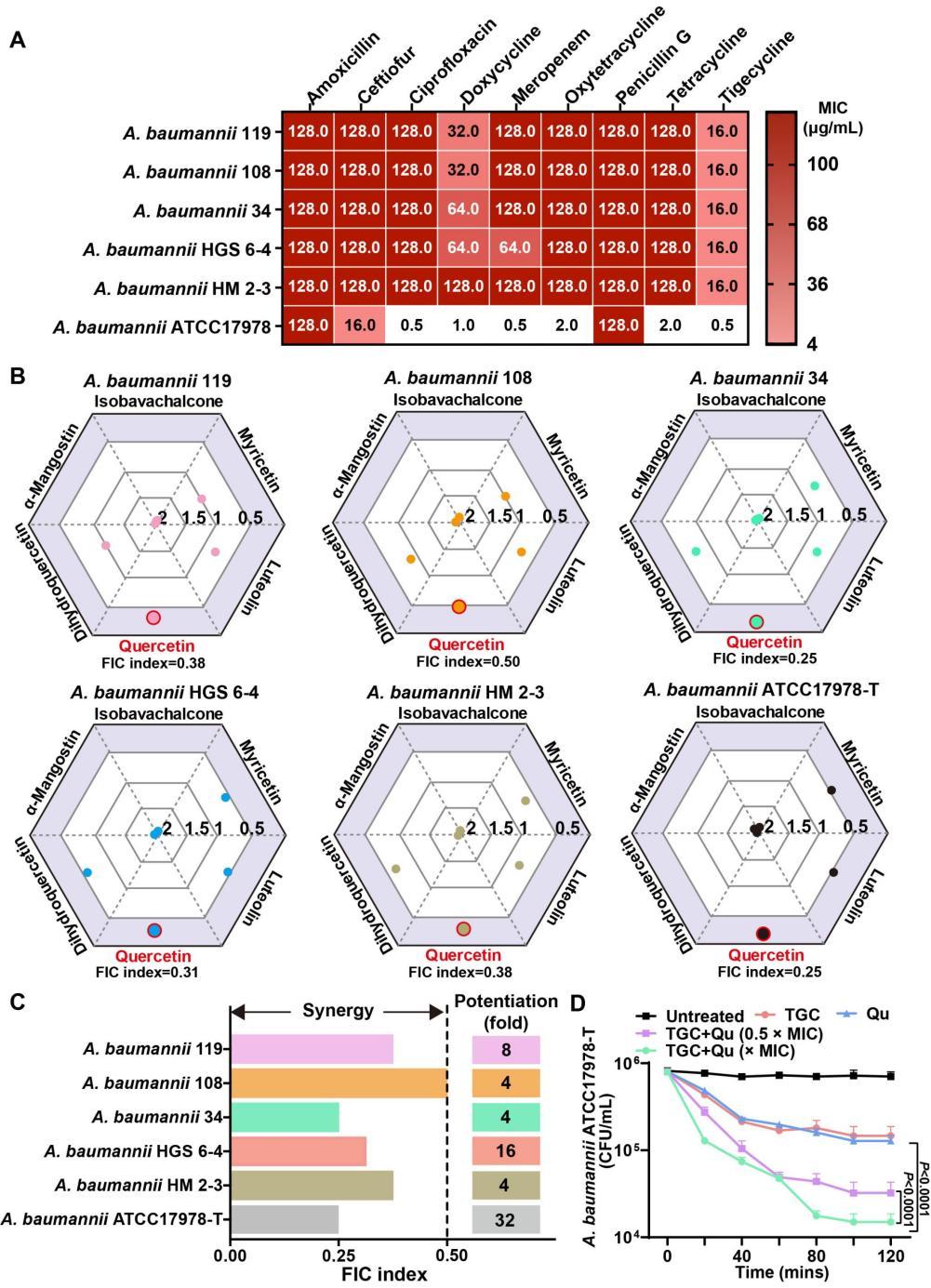
Figure Note: Synergistic antibacterial effects of quercetin combined with tigecycline.
The research highlights that quercetin effectively boosts tigecycline's efficacy through a "double-hit" mechanism. First, it increases bacterial cell membrane permeability to facilitate drug entry. Second, it competitively inhibits efflux pumps to minimize drug expulsion. This dual action significantly elevates the intracellular accumulation of tigecycline and amplifies its inhibitory impact on protein synthesis. In a mouse model of acute pneumonia, the combination therapy significantly outperformed monotherapy in improving lung histopathology, alleviating edema, decreasing bacterial load, and reducing inflammatory factors. Furthermore, the combination achieved a 100% survival rate and demonstrated a favorable safety profile. This study establishes a comprehensive chain of evidence from molecular mechanisms to in vivo efficacy, supporting the use of natural flavonoids as antibiotic adjuvants, showcasing immense application potential for reducing antibiotic usage, increasing efficacy, and promoting rational drug application.
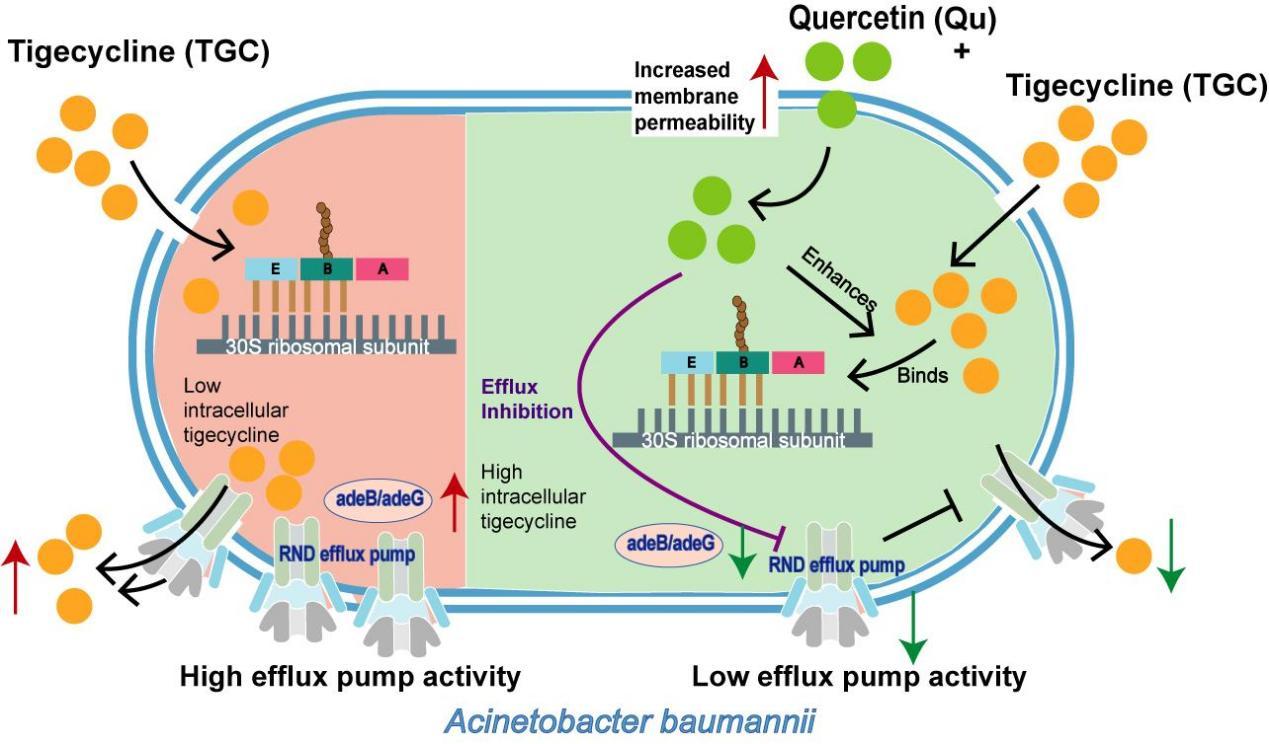
Figure Note: Schematic diagram of the synergistic antibacterial mechanism of quercetin and tigecycline.
The co-first authors of the paper include Zhigang Sun (a graduated master's student from Beijing University of Agriculture who is currently pursuing a doctorate at Guangxi University), Ziwen Cai (a graduated master's student), and Yangyang Bian (a current master's student). Xiaoye Liu is the lead corresponding author, alongside co-corresponding author Researcher Bingjie Li from Scotland's Rural College (SRUC) in the United Kingdom. Professor Kui Zhu from China Agricultural University provided clinical isolates and substantial support for the study. Funding for this research was provided by the National Natural Science Foundation of China (32202864), the Beijing University of Agriculture Reserve Project (BUA-KYCB-2026001), and the International Cooperation Horizontal Project (BUA-202500958).
Xiaoye Liu emphasized that the team will continue to align with the national strategic demand of "reducing antibiotic usage and increasing efficacy." They plan to persistently explore natural product antibacterial adjuvants and their mechanisms, while concurrently developing complementary drug delivery systems. The ultimate goal is to consistently generate high-level scientific research outcomes, contributing wisdom and strength to accelerate high-level agricultural self-reliance and technological advancement.

 search


 LATEST NEWS