During the National Day holiday, "Red Ribbon" and the "Color Bell" series, new Salvia splendens varieties independently bred by the Salvia breeding research team at Beijing University of Agriculture, were featured in the National Day-themed flower displays along Chang'an Avenue. The Beijing Daily, Beijing Youth Daily, Farmers' Daily and other media outlets have also reported on the varieties. After two decades of dedicated breeding, these flowers are bringing a distinctive "BUA color" to Chang'an Avenue and attracting growing attention.
With its upright, gracefully spreading magenta flower spikes, "Red Ribbon" adds a vibrant touch to the displays, while the "Color Bell" series features naturally rounded plant forms. Together, they bring a distinctive BUA touch to the city's iconic avenue. This marks the third appearance of BUA's new Salvia splendens varieties in the National Day flower displays, following their appearances in 2022 and 2024. Coinciding with the university's 70th anniversary, the faculty and students are presenting these independently bred flower varieties as a tribute to the 77th anniversary of the founding of the People's Republic of China.
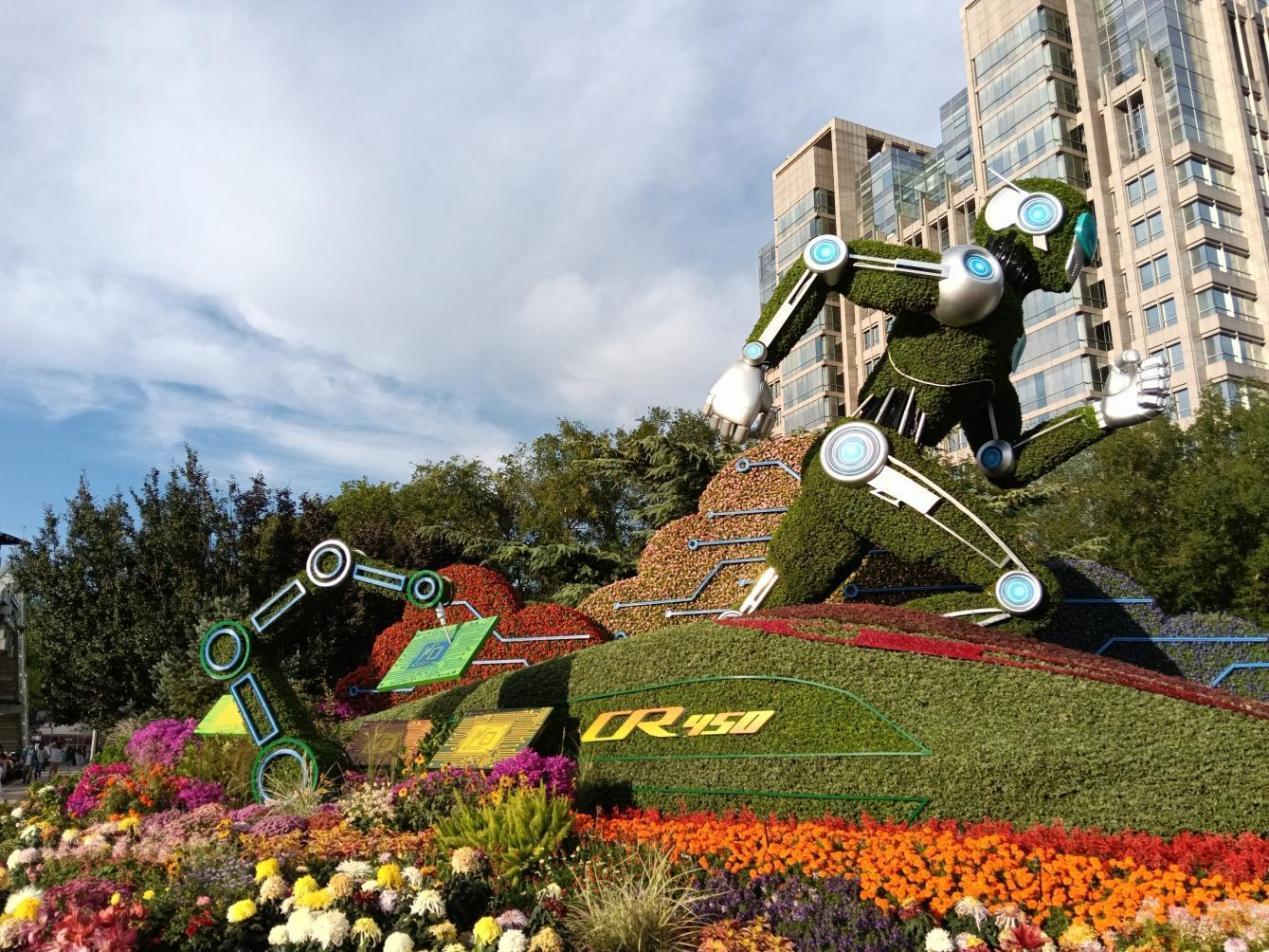
Native to Brazil and other parts of South America, Salvia splendens is widely used in gardens, flower beds and landscape plantings and is a popular choice for ornamental displays. Its flowers come in a variety of colors, including red, purple and white. "Red Ribbon," developed by the Salvia breeding research team at BUA, is a new tall, heat-tolerant Salvia splendens variety. It can reach a height of 80 to 86 centimeters, with both the calyx and corolla displaying an elegant magenta hue. Its flower spikes are uniform and full, and the plant maintains steady growth and continues to bloom normally even under high summer temperatures. With a long and impressive flowering period, "Red Ribbon" is suitable for a range of landscape applications, including flower borders, large-scale flower displays and expansive landscape plantings, making it a high-quality ornamental variety for landscape projects in China. The "Color Bell" series, which has been featured repeatedly in the National Day flower displays, has strong branching characteristics and does not require manual pinching. The plants naturally develop a spherical shape, a feature rarely seen among comparable varieties in China and abroad. The magenta tones of "Color Bell Magenta" and "Red Ribbon" complement the festive atmosphere of the National Day celebrations, while the purple of "Color Bell Purple" symbolizes good fortune and prosperity. Together, the varieties create a distinctive "BUA color" for the National Day celebrations.
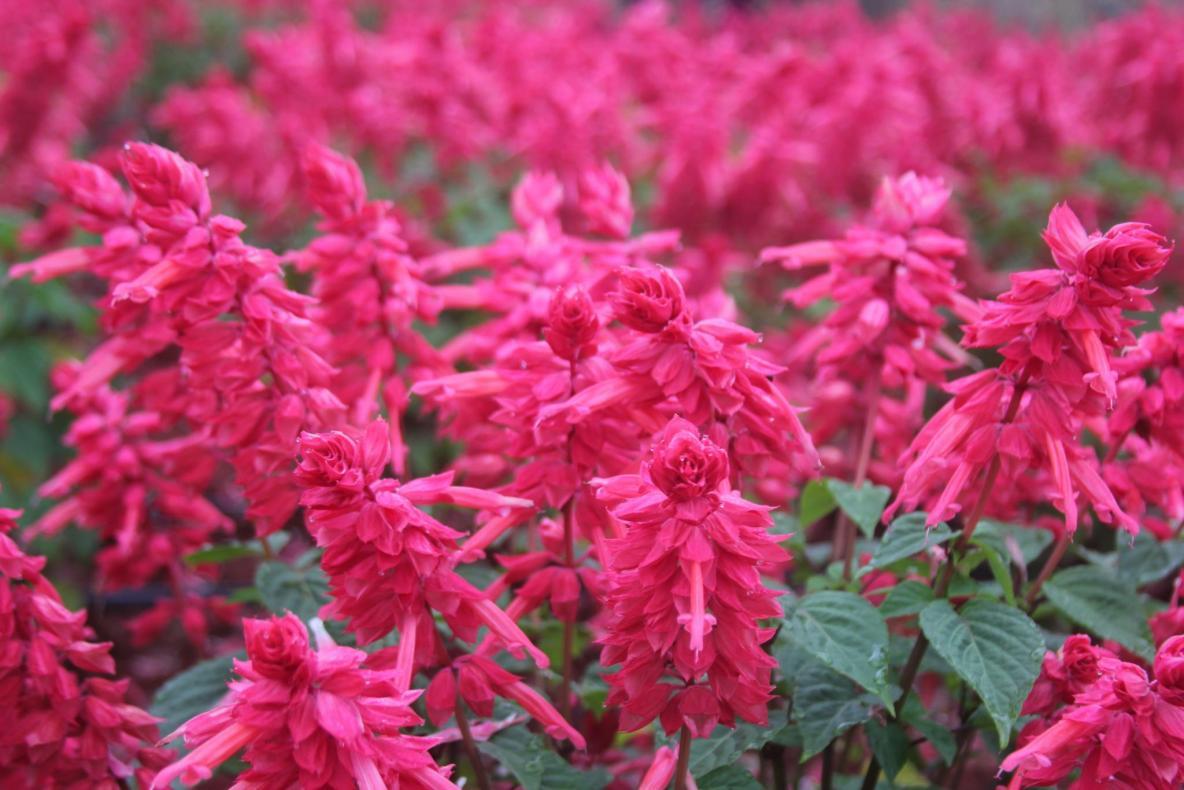
New Salvia splendens variety "Red Ribbon"
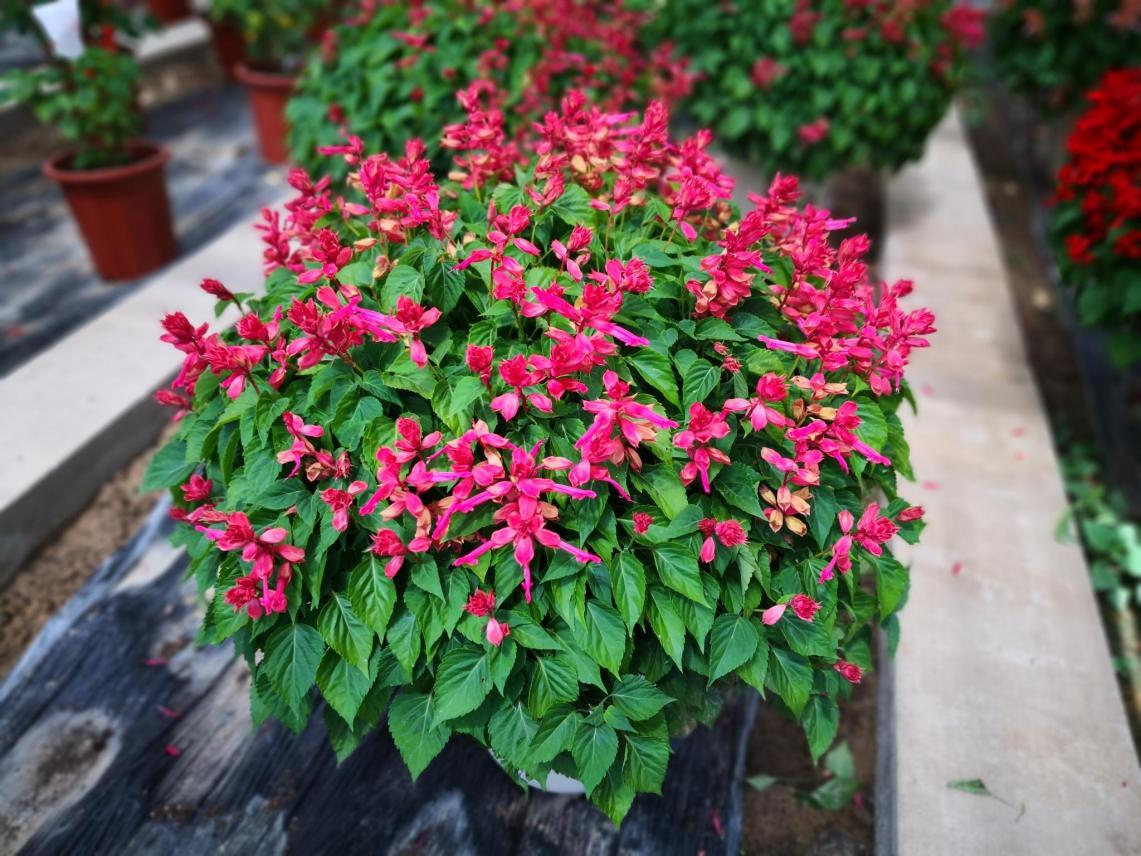
New Salvia splendens variety "Color Bell Purple"
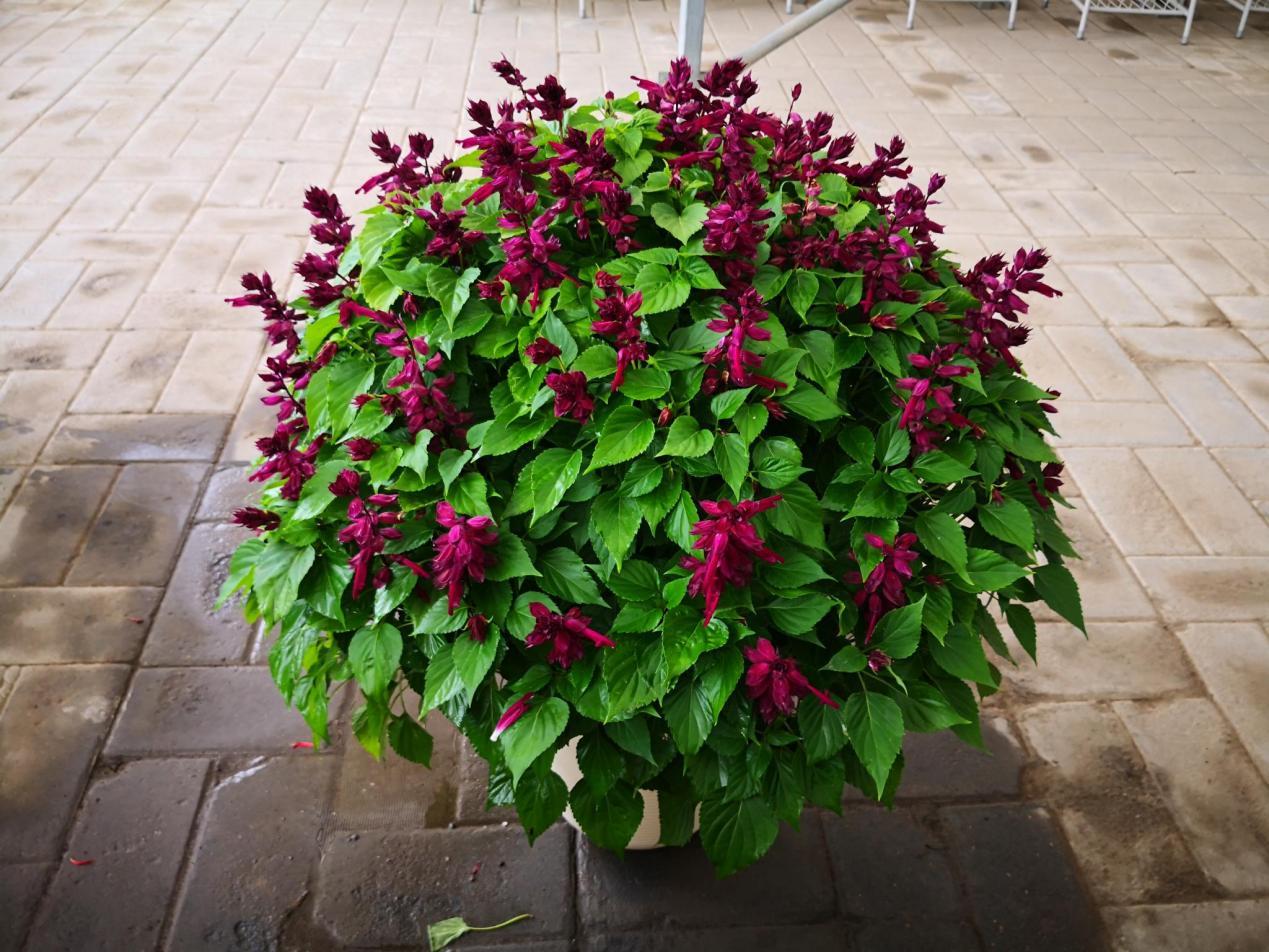
New Salvia splendens variety "Color Bell Purple"
The Salvia breeding research team was established in 2002 under the leadership of Professor Liu Kefeng. Associate Professor Chen Hongwei, together with Wang Hongli, Ge Xiuxiu and Hong Peipei, later continued the team's breeding work. From the outset, the team began collecting germplasm resources, initially gathering 70 to 80 lines from China and abroad to establish a germplasm nursery. After more than two decades of continuous research, selection and propagation, the team has developed more than 200 superior Salvia splendens lines in tall, medium-height and dwarf forms, encompassing nearly 20 flower colors.
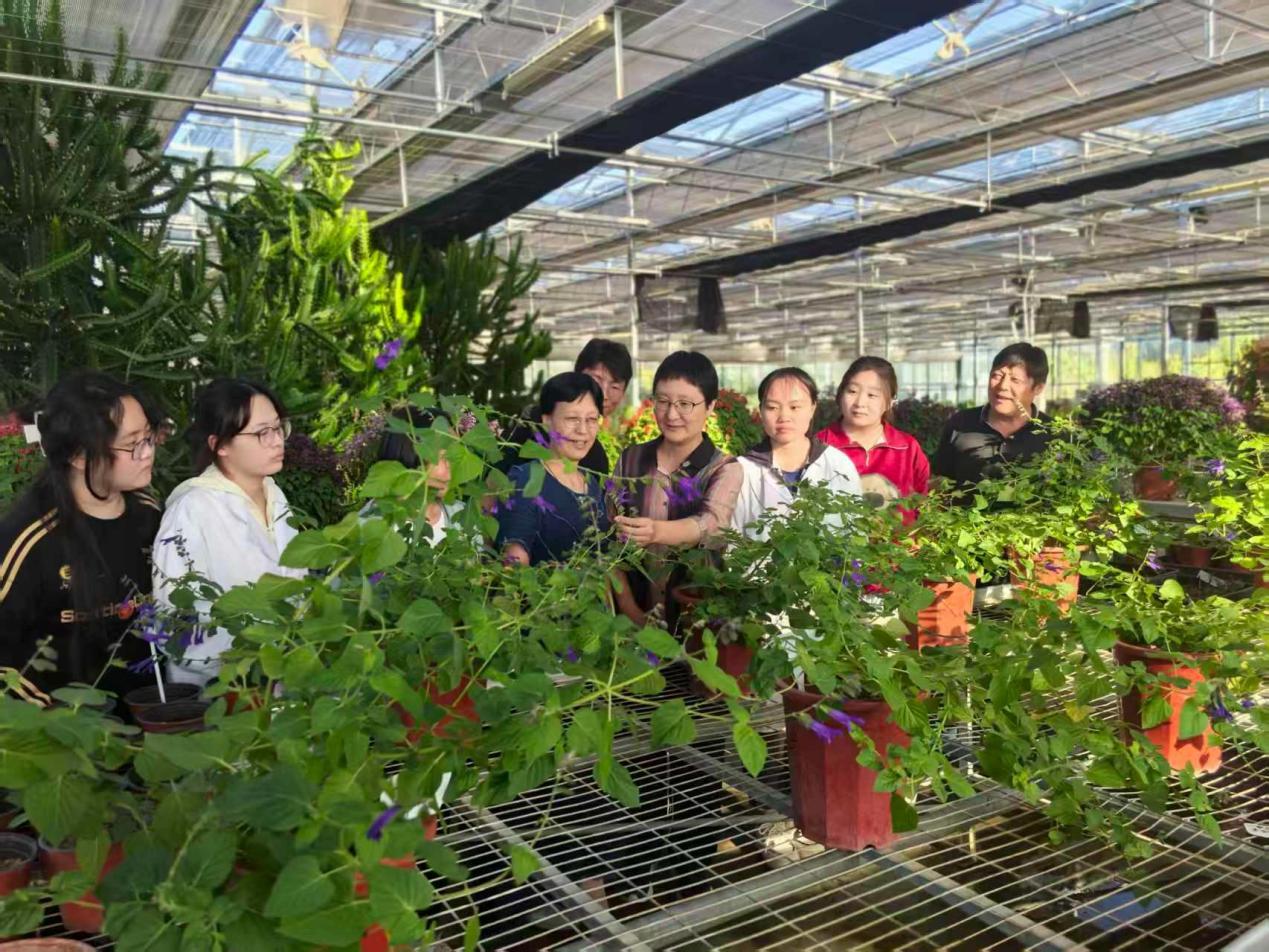
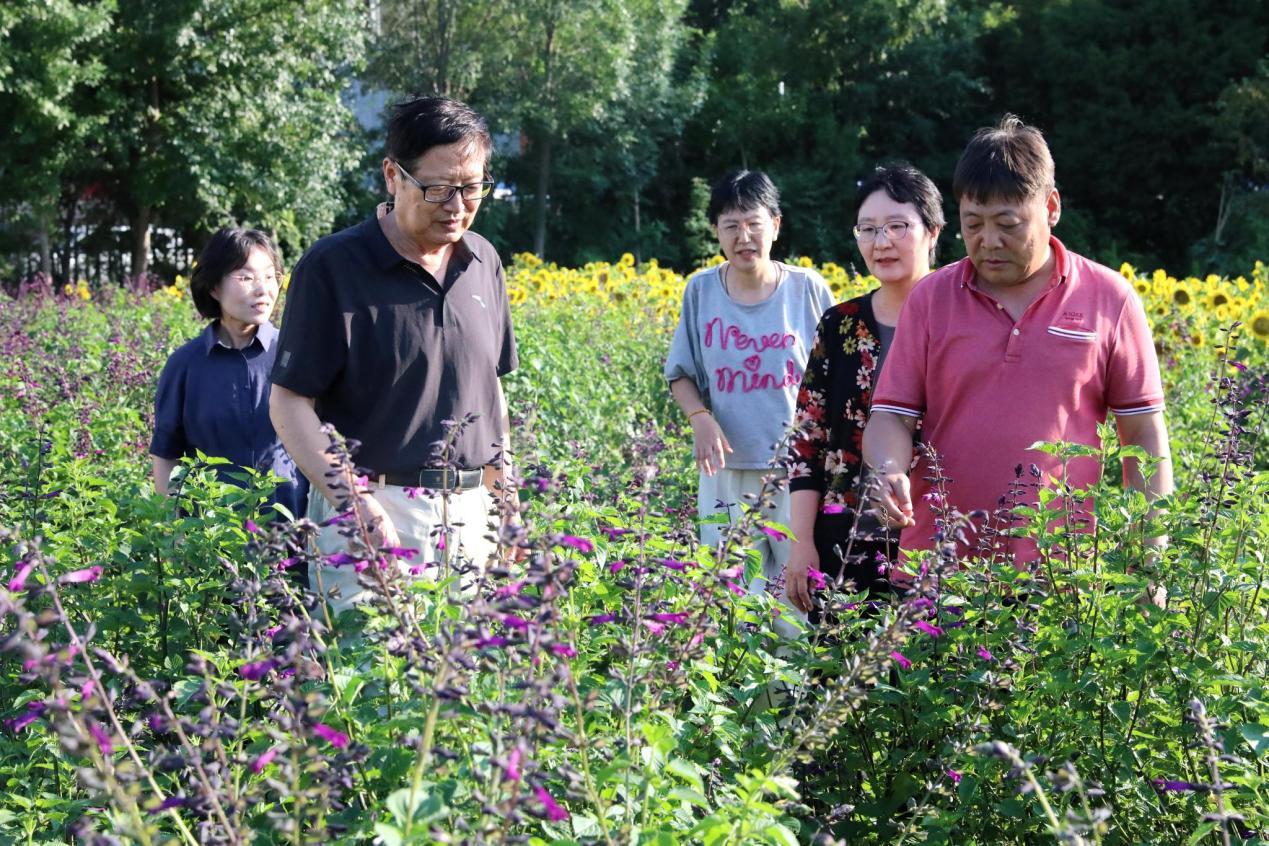
Salvia breeding research team
Over the years, a series of Salvia splendens varieties independently bred by the team have been used in demonstration projects and promoted in numerous regions across China. In Beijing, the university's varieties have been widely used in landscaping projects in districts including Haidian, Changping and Yanqing. "Color Bell Magenta" and "Color Bell Purple" have appeared in the National Day flower displays along Chang'an Avenue and have also been showcased at major national events, including the International Horticultural Exhibition Beijing China and the China Flower Expo. The varieties have also been introduced to regions beyond Beijing, including Inner Mongolia, Yunnan, Hainan and Shandong, where they have undergone trial cultivation and been used in large-scale flower landscapes and other applications. The team has also provided technical support for their propagation and cultivation. The team's research achievements have received numerous honors, including the Beijing Science and Technology Progress Award in Landscaping and Greening, the China Industry‑University‑Research Collaboration and Innovation Achievement Award, a Gold Award in the Indoor Exhibits Competition for Chinese Provinces, Autonomous Regions and Municipalities at the International Horticultural Exhibition 2019 Beijing China, and a Science and Technology Achievement Award at the Ninth China Flower Expo. These honors highlight the innovative capabilities of China's domestic ornamental plant breeding sector.

 search


 LATEST NEWS